1 min read
Artificial Intelligence with Vision: The Next Step for Intelligent Assistants
Understanding an image, a document, or a real-world environment fundamentally changes what an AI can accomplish.
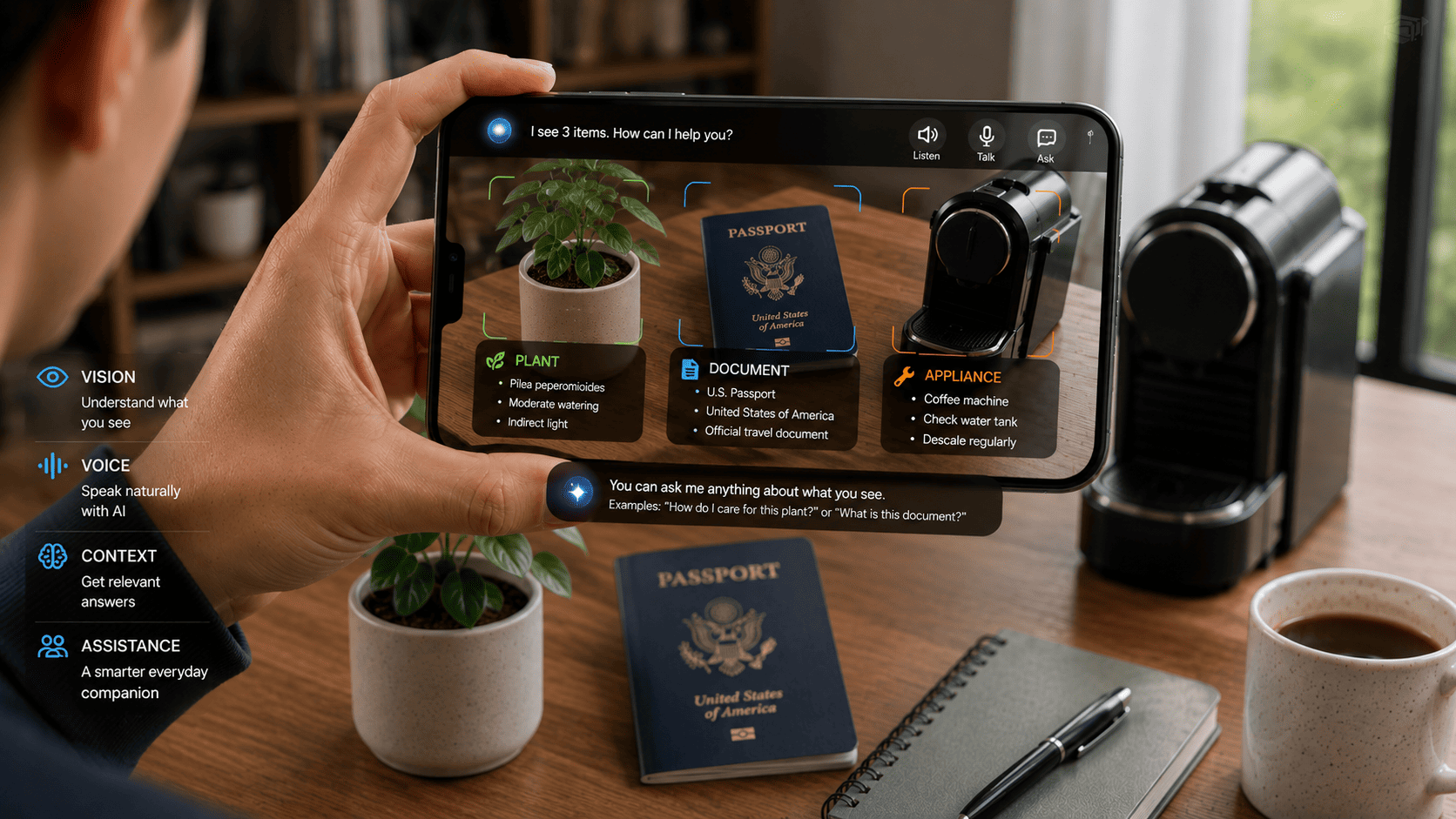
For a long time, artificial intelligence systems operated primarily on text. They could answer questions, generate content, or analyze written information. However, a large part of our daily lives does not exist in text form: it exists as images, objects, and environments.
The arrival of systems capable of seeing marks a major evolution. Thanks to visual analysis, an AI can now observe a scene, recognize important elements, and provide assistance directly related to what it perceives.
This capability opens up new possibilities. A user can show a malfunctioning device, an administrative document, an unknown plant, or a software interface. The AI can then analyze what it sees and provide explanations tailored to the situation.
Computer vision also helps reduce friction. Instead of precisely describing a problem, it becomes possible to simply show it. This approach is often faster, more intuitive, and closer to the way humans naturally communicate.
In the future, the combination of vision, voice, and language could transform AI assistants into true digital partners capable of understanding the context around them. The goal is not only to answer questions, but also to better understand the real-world situations in which users operate.
The ability to see is now one of the most significant advances in modern artificial intelligence. It brings digital systems closer to a more complete understanding of the world and paves the way for more useful, more natural, and more context-aware assistance experiences.