1 min read
Why Multimodal AI Applications Represent the Future of Artificial Intelligence
When vision, voice, and language work together, artificial intelligence becomes more natural and more useful.
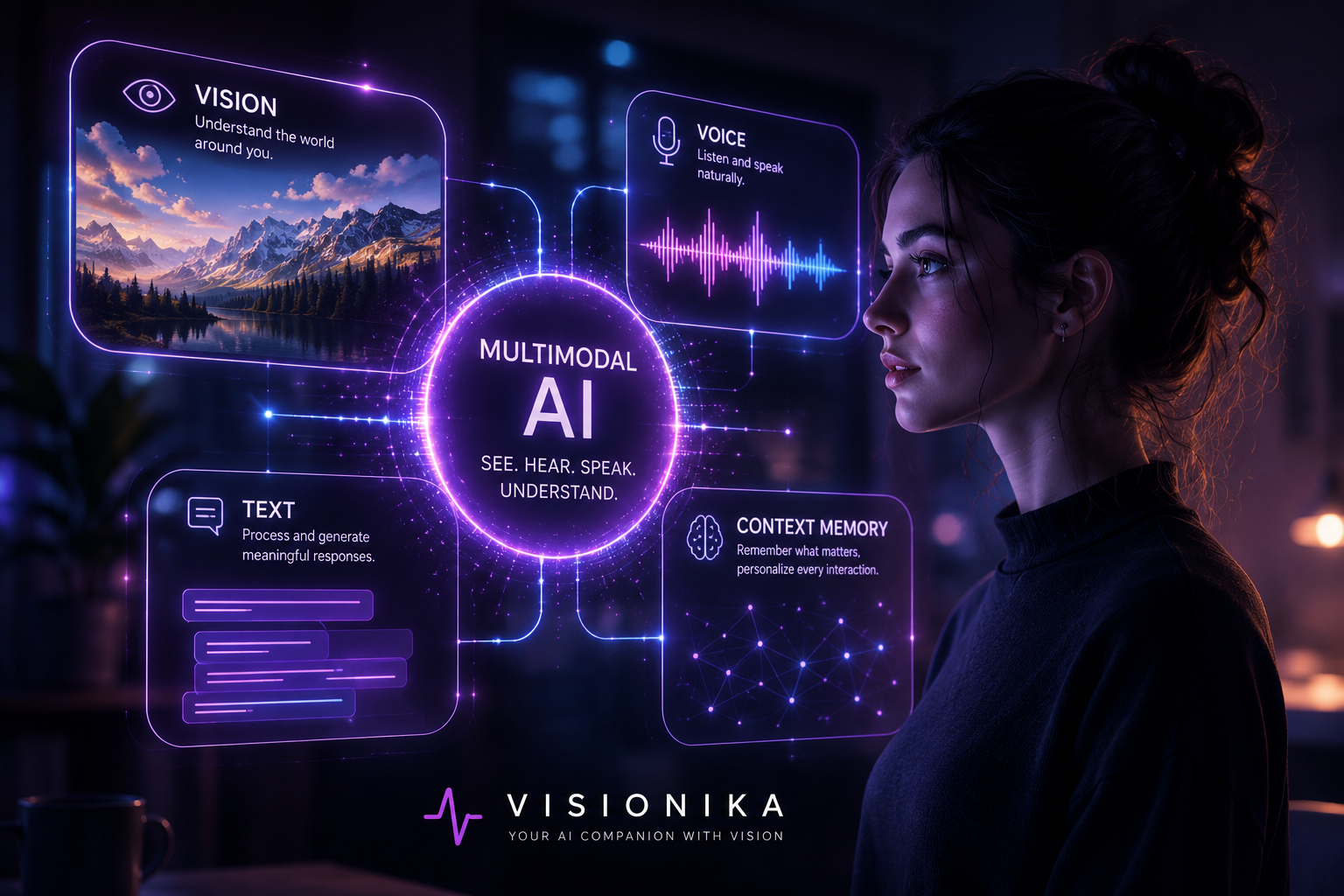
For several years, artificial intelligence has primarily communicated through text. Users asked a question, received an answer, and then continued the conversation. This approach enabled considerable progress, but it reflects only part of the way humans interact with the world.
Multimodal AI applications take a new step forward. They combine several forms of perception, such as vision, voice, language, and sometimes even location, to understand a situation as a whole. Rather than being limited to what a user writes, they can also take into account what the user shows, says, or what surrounds them.
This approach opens the door to many use cases. An AI can analyze a document simply presented in front of a camera, help identify an unknown object, translate text written in a foreign language, or provide explanations tailored to a specific visual context.
Multimodality also improves accessibility. Some people prefer speaking rather than writing. Others would rather show a problem than describe it. By combining multiple communication channels, AI adapts more effectively to each person's needs.
As these technologies advance, interactions become more natural. Users no longer need to turn every situation into a lengthy text description. They can simply show, speak, and interact spontaneously.
Multimodal AI applications do not replace traditional interfaces. They complement them by bringing artificial intelligence closer to the natural way human beings operate. This is why they are now considered one of the most important developments in modern AI.